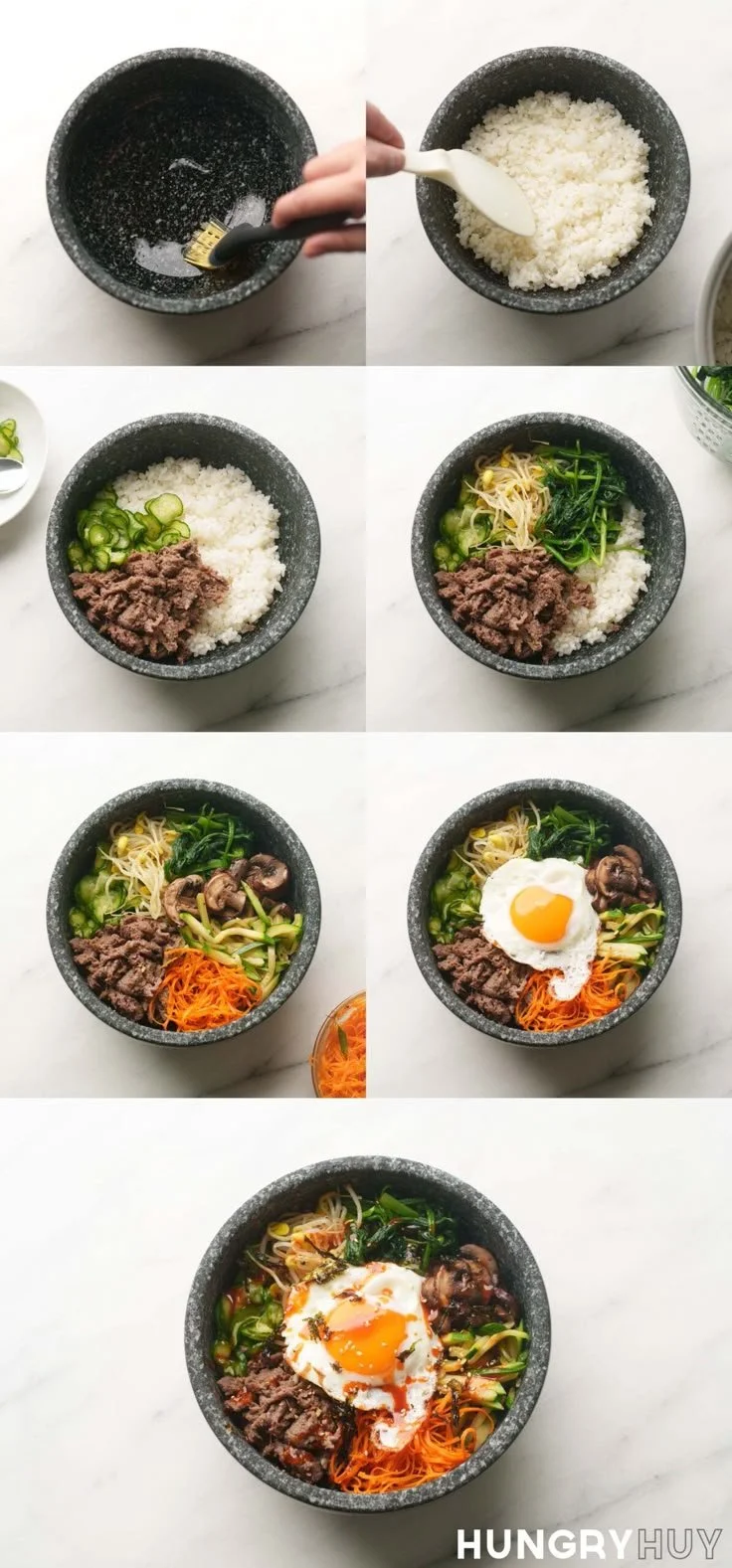
Bibimbap is a vibrant and satisfying Korean rice bowl that brings together a colorful array of vegetables, tender beef, and perfectly cooked rice, topped with a fried egg. This wholesome dish not only looks beautiful but also packs a punch of flavor, making it a wonderful choice for family dinners or meal prep. The layers of taste and texture make it truly rewarding to enjoy!
Why You’ll Love Bibimbap
- Flavorful Harmony: Each ingredient complements the others, creating a delightful balance of flavors – from savory beef and earthy mushrooms to crisp cucumber and fresh spinach.
- Nutrient-Rich: Packed with fresh vegetables, protein, and healthy fats, this dish offers a well-rounded meal that nourishes and satisfies.
- Customizable: You can easily swap in your favorite vegetables or proteins, making it versatile to suit different tastes or dietary restrictions.
- Quick Prep: With a little organization, you can pull this dish together in under an hour, making it perfect for a midweek dinner.
- Stunning Presentation: The colorful layers mean this dish is not only delicious but also visually appealing, perfect for impressing guests or sharing on social media.
Recipe Overview
- Prep Time: 20 minutes
- Cook Time: 25 minutes
- Total Time: 45 minutes
- Servings: 4
- Difficulty Level: Intermediate
Ingredients You’ll Need for Bibimbap
-
For the Beef Marinade
- 1 lb beef brisket (thinly shaved)
- 2 tbsp low-sodium soy sauce
- 1 medium Asian pear (peeled and grated)
- 1 tsp roasted sesame oil
- 1 inch fresh peeled ginger (grated)
- 8 cloves fresh garlic (minced)
- ¼ medium white onion (grated)
- 1 tbsp rice syrup
- 1 tbsp mirin
- ¼ tsp black pepper
- Neutral cooking oil for frying
-
For the Vegetables
- 6 cups water (plus more for rinsing)
- 2 tbsp kosher salt (plus more for seasoning, Diamond Crystal brand)
- Ice (for blanching)
- 1 medium Persian cucumber (sliced thinly)
- ¼ tsp kosher salt
- 1 tsp rice vinegar
- 1 bunch spinach
- ¼ tsp kosher salt (Diamond Crystal brand)
- Splash roasted sesame oil
- 2 cups bean sprouts
- ½ tsp kosher salt (Diamond Crystal brand)
- Splash roasted sesame oil
- 2 cups sliced brown mushrooms
- 1 tsp neutral oil
- ¼ tsp kosher salt (Diamond Crystal brand)
- Splash roasted sesame oil
- 1 medium carrot (julienned)
- ¼ tsp kosher salt (Diamond Crystal brand)
- 1 tsp neutral oil
- Splash roasted sesame oil
- 1 medium zucchini (julienned)
- 1 tsp neutral oil
- ¼ tsp kosher salt (Diamond Crystal brand)
- Splash roasted sesame oil
-
For Assembly
- 3 cups rice (cooked)
- 3 large eggs (fried)
- Neutral oil (for frying eggs)
- Kosher salt (Diamond Crystal brand, for eggs)
- Gochujang sauce (for serving)
- Roasted sesame seeds (optional topping)
- Roasted seaweed (optional topping)
How to Make Bibimbap
-
Cook the Rice
Prepare 3 cups of rice according to package instructions. Once cooked, set it aside for assembly. -
Marinate the Beef
In a bowl, combine the beef, soy sauce, grated Asian pear, sesame oil, ginger, garlic, onion, rice syrup, mirin, and black pepper. Mix well and let marinate for at least 15 minutes while you prepare the other ingredients. -
Blanch Spinach
Bring 6 cups of water to a boil. Add the spinach and blanch for about 30 seconds. Remove and plunge into an ice bath to stop cooking. Drain and set aside. -
Prepare Other Vegetables
In the same boiling water, blanch the bean sprouts for 2 minutes, drain, and set aside. Repeat this step for the zucchini and carrot, briefly blanching them until just tender. -
Sauté the Mushrooms
In a large skillet, heat 1 teaspoon of neutral oil over medium heat. Add the sliced mushrooms and sauté until soft and browned. Season with ¼ tsp kosher salt and a splash of roasted sesame oil. Remove from skillet and set aside. -
Cook the Beef
In the same skillet, add a bit more neutral oil if needed, and cook the marinated beef over medium-high heat until it’s caramelized and cooked through, about 5-7 minutes. Remove from the heat. -
Fry the Eggs
In a clean skillet, heat a little neutral oil over medium heat and fry the eggs sunny-side up, adding kosher salt to taste. -
Assemble the Bowls
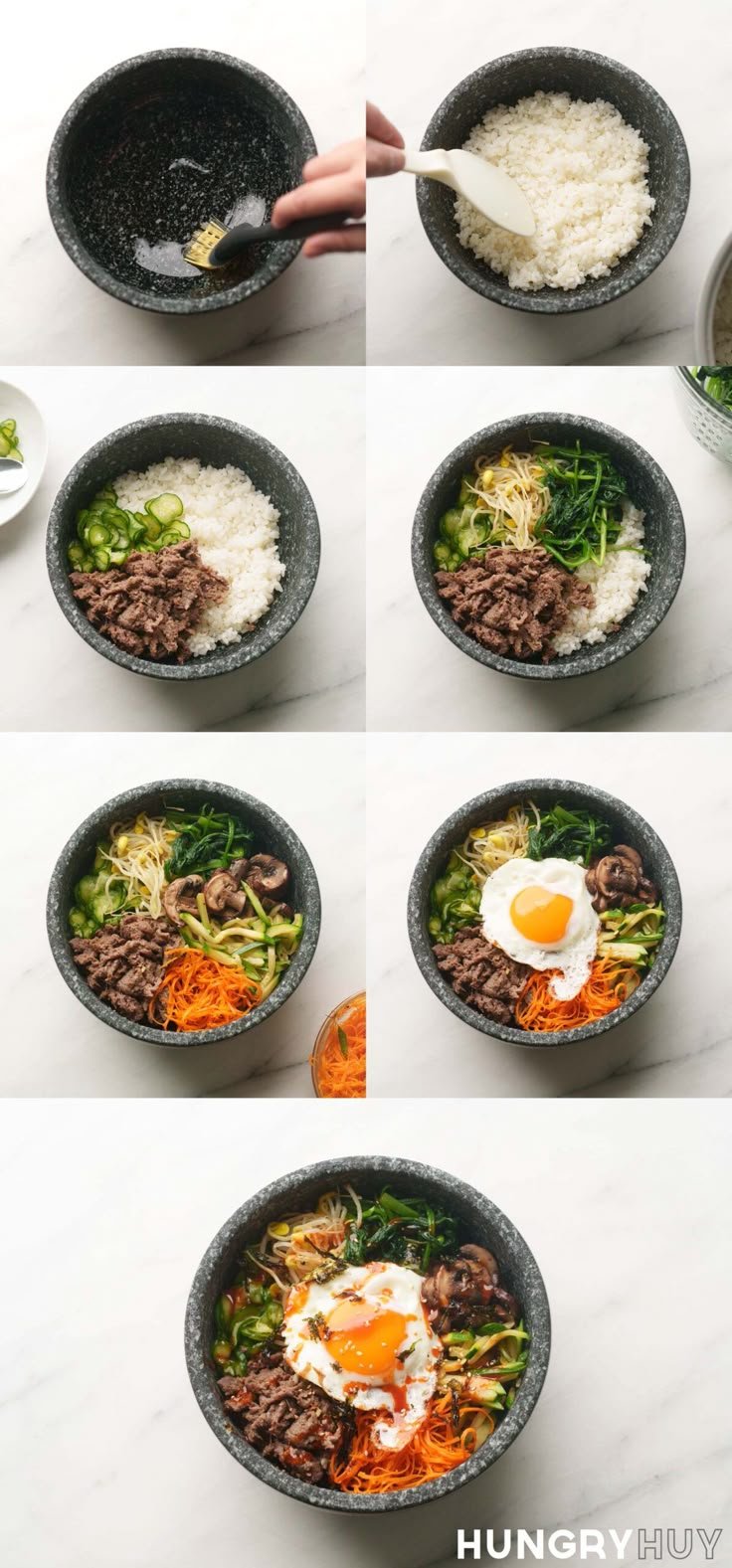
In each bowl, place a serving of rice. Arrange the cooked vegetables, marinated beef, and fried egg on top. Drizzle with gochujang sauce and optional sesame seeds and seaweed.
Tips for Success
- Prep Ahead: Slice vegetables the night before to save time during assembly.
- Control Heat: Adjust the heat when frying the beef to avoid overcooking. Aim for crispy edges.
- Quality Ingredients: Use fresh vegetables for the best flavor and crunch.
- Gochujang Variety: If you prefer a milder spice, opt for a sweeter gochujang or adjust the amount to your spice level.
- Egg Techniques: For a runny yolk, be careful not to overcook the eggs. Fry them in a non-stick pan for easier handling.
Easy Variations
- Swap the Protein: Try using chicken or tofu instead of beef for a different flavor profile.
- Spice It Up: Add kimchi for an extra kick and tang.
- More Veggies: Include bell peppers, broccoli, or asparagus for additional colors and nutrients.
- Vegan Option: Replace the beef with marinated mushrooms or firm tofu and use vegan eggs like Just Egg.
- Brown Rice: Opt for brown rice instead of white for a heartier and more nutritious base.
What to Serve with Bibimbap
- Miso Soup: A warm miso soup complements the flavors of bibimbap and enhances the meal’s warmth.
- Korean Fried Chicken: The savory and crispy chicken pairs well with the fresh flavors of bibimbap.
- Korean Pickled Radishes: These tangy pickles provide a great contrast to the rich and savory ingredients.
- Vegetable Dumplings: Light and fluffy dumplings are a great side, adding even more veggies to your meal.
- Fruit Salad: A refreshing fruit salad adds a sweet contrast to the savory dish.
Storage and Reheating
- Refrigerator Storage: Store leftovers in airtight containers in the refrigerator for up to 3 days.
- Freezer Storage: The beef can be frozen for up to 2 months; however, it’s best to keep individual components for freshness.
- Reheating: Reheat the rice and beef in the microwave, adding a splash of water to maintain moisture. Heat vegetables in a skillet until warmed through.
- Preserve Texture: Adding a drizzle of sesame oil or a little water when reheating can help keep ingredients from drying out.
Common Mistakes to Avoid
- Overcooking the Eggs: Fry eggs just until the whites are set while keeping the yolk runny for the best texture.
- Neglecting the Marinade: Letting the beef marinate enhances the flavor, so don’t skip this step.
- Too Much Gochujang: Start with a small amount of gochujang; you can always add more, but it can be hard to take it out once added.
- Not Rinsing the Vegetables: Rinse blanched vegetables in cold water to stop the cooking process and maintain their bright color and crispness.
Bibimbap: Background & Cultural Inspiration
Bibimbap traditionally symbolizes the concept of harmony in Korean culture, featuring a mix of ingredients that come together to create a cohesive dish. Originating in the Joséon Dynasty, this dish was often consumed during celebrations and has now become a staple in Korean cuisine. The combination of seasonal vegetables, protein, and rice reflects the bounty of nature and the importance of using fresh ingredients in Korean cooking. The delightful presentation invites diners to mix and enjoy the diverse flavors, making it both a dish and an experience.
Frequently Asked Questions
Can I prepare Bibimbap in advance?
Yes, you can prepare the elements in advance. Marinate the beef and blanch the vegetables beforehand, then assemble when ready to eat.
What if I don’t have gochujang?
If you can’t find gochujang, you can substitute with sriracha for spice, though the flavor will be somewhat different.
Can I make Bibimbap vegetarian?
Absolutely! Use hearty vegetables, mushrooms, and tofu as the main protein source and omit the beef.
How can I spice it up?
Adjust the amount of gochujang to your liking or add kimchi for an extra kick.
What other veggies can I add?
You can include bell peppers, zucchini, or even broccoli in your bibimbap for more color and nutrition.
Final Thoughts
This Bibimbap recipe not only delivers a harmonious blend of flavors and textures but also invites creativity and customization. It’s a beautiful way to enjoy fresh ingredients while creating a satisfying meal that can be tailored to your tastes. Give it a try, and you’ll soon find it becoming a favorite dish in your home!
PrintBibimbap

A vibrant Korean rice bowl featuring a colorful array of vegetables, tender beef, and a fried egg, packed with flavor and nutrients.
- Prep Time: 20 minutes
- Cook Time: 25 minutes
- Total Time: 45 minutes
- Yield: 4 servings
- Category: Main Course
- Method: Stovetop
- Cuisine: Korean
- Diet: Omnivore
Ingredients
- 1 lb beef brisket (thinly shaved)
- 2 tbsp low-sodium soy sauce
- 1 medium Asian pear (peeled and grated)
- 1 tsp roasted sesame oil
- 1 inch fresh peeled ginger (grated)
- 8 cloves fresh garlic (minced)
- ¼ medium white onion (grated)
- 1 tbsp rice syrup
- 1 tbsp mirin
- ¼ tsp black pepper
- Neutral cooking oil for frying
- 6 cups water (plus more for rinsing)
- 2 tbsp kosher salt (plus more for seasoning)
- Ice (for blanching)
- 1 medium Persian cucumber (sliced thinly)
- ¼ tsp kosher salt
- 1 tsp rice vinegar
- 1 bunch spinach
- 2 cups bean sprouts
- 2 cups sliced brown mushrooms
- 1 medium carrot (julienned)
- 1 medium zucchini (julienned)
- 3 cups rice (cooked)
- 3 large eggs (fried)
- Kosher salt (for eggs)
- Gochujang sauce (for serving)
- Roasted sesame seeds (optional)
- Roasted seaweed (optional)
Instructions
- Cook the rice according to package instructions. Once cooked, set it aside for assembly.
- Marinate the beef by combining the beef, soy sauce, grated Asian pear, sesame oil, ginger, garlic, onion, rice syrup, mirin, and black pepper in a bowl. Let marinate for at least 15 minutes.
- Blanch the spinach in boiling water for about 30 seconds. Remove and plunge into an ice bath to stop cooking. Drain and set aside.
- Prepare the bean sprouts, zucchini, and carrot by blanching them in the same boiling water until just tender.
- Sauté the mushrooms in a large skillet with 1 tsp of neutral oil until soft and browned. Season with kosher salt and a splash of roasted sesame oil.
- Cook the marinated beef in the same skillet until caramelized and cooked through, about 5-7 minutes. Remove from heat.
- Fry the eggs sunny-side up in a clean skillet with neutral oil and kosher salt to taste.
- Assemble each bowl with a serving of rice topped with cooked vegetables, marinated beef, and fried egg. Drizzle with gochujang sauce and top with sesame seeds and seaweed if desired.
Notes
You can prepare the elements in advance for quicker assembly. Feel free to customize the vegetables and protein based on your preference.