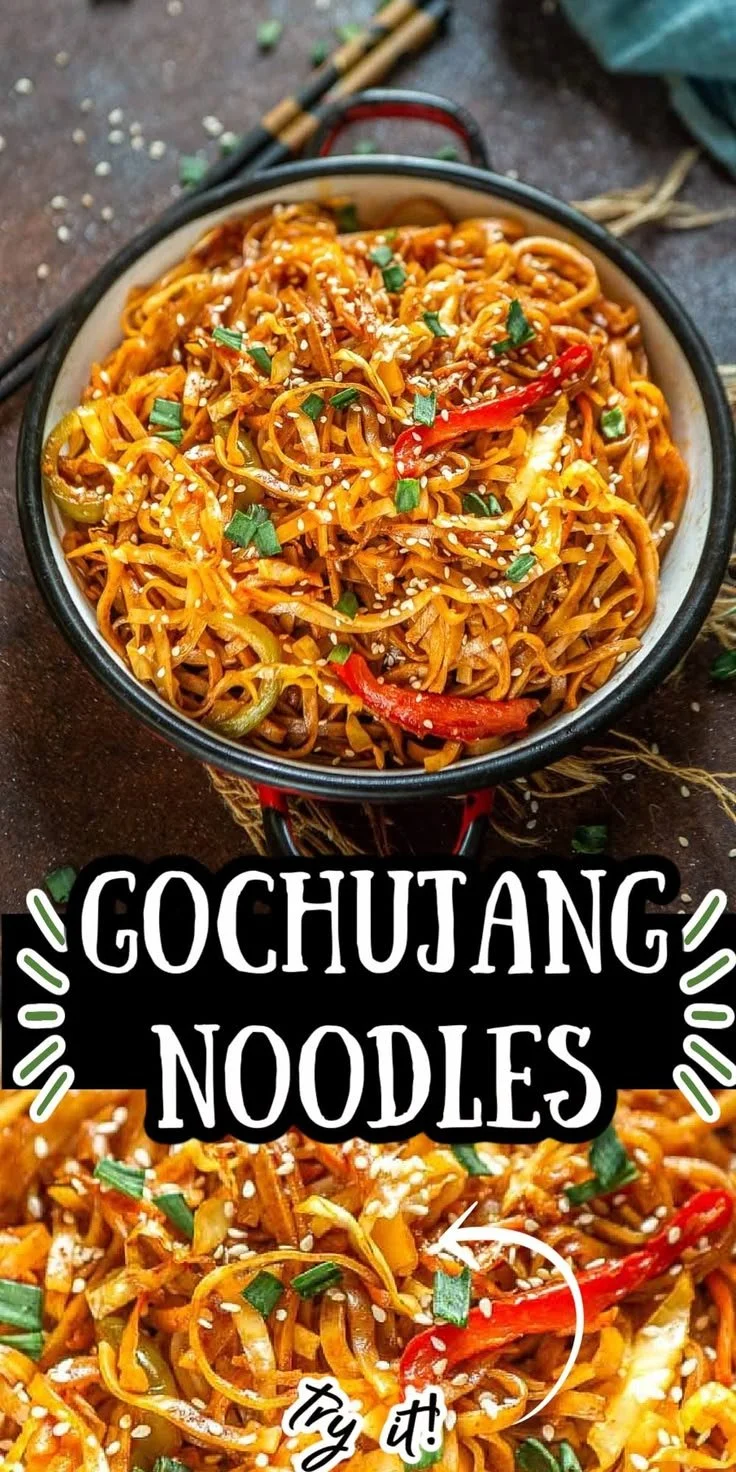
Korean Gochujang Noodles are a flavorful and quick option for those busy weeknights when you crave something satisfying and special. This dish combines a delightful medley of vegetables with a spicy-sweet sauce that packs a punch, making it a comforting meal that everyone can enjoy. It’s also perfect for meal prep, so you can whip up a batch and savor the flavors throughout the week!
Why You’ll Love Korean Gochujang Noodles
- Quick and Easy: This recipe comes together in under 30 minutes, making it a perfect dish for busy weeknights.
- Flavorful Sauce: The combination of Gochujang, Hoisin, and other ingredients creates a rich and complex flavor profile that balances sweetness and spiciness.
- Customizable: You can easily modify the ingredients based on what you have at hand, making this dish versatile to your taste.
- Healthy and Colorful: Packed with fresh vegetables like bell peppers, cabbage, and carrots, these noodles not only look appealing but also add nutritional value.
- Satisfying Meal: The noodles provide a hearty base, while the sauce and vegetables add substantial flavor and texture, making it filling yet light.
Recipe Overview
- Prep Time: 10 minutes
- Cook Time: 15 minutes
- Total Time: 25 minutes
- Servings: 4
- Difficulty Level: Easy
Ingredients You’ll Need for Korean Gochujang Noodles
-
Noodles:
- 8 ounces uncooked rice noodles (250 g)
-
Sauce:
- 3 tablespoons Gochujang paste
- 3 tablespoons Hoisin sauce
- 2 tablespoons dark soy sauce
- 3 tablespoons lime juice
- 1 teaspoon brown sugar
-
Vegetables:
- ½ cup thinly sliced mixed bell peppers
- 1 cup shredded cabbage
- ½ cup shredded carrots
-
Cooking Essentials:
- 2 tablespoons sesame oil
- 1 tablespoon minced garlic
- 1 tablespoon vegetable oil
The Gochujang paste provides a savory kick, while the Hoisin adds sweetness. You can substitute rice noodles with other types, like soba or udon, depending on your preference.
How to Make Korean Gochujang Noodles
-
Cook the Noodles
- Bring a pot of water to a boil. Add the rice noodles and cook according to the package instructions until they are tender yet firm to the bite. Drain and set aside.
-
Prepare the Sauce
- In a bowl, whisk together Gochujang paste, Hoisin sauce, dark soy sauce, lime juice, and brown sugar. Ensure the mixture is well combined and set aside for later.
-
Sauté the Vegetables
- Heat vegetable oil in a large skillet over medium heat. Add minced garlic and stir-fry for about 30 seconds until fragrant. Then, toss in the sliced bell peppers, shredded cabbage, and carrots, cooking for about 3-4 minutes or until they’re slightly tender.
-
Combine Noodles and Sauce
- Reduce the heat to low. Add the drained rice noodles and the prepared sauce to the skillet with the vegetables. Stir gently to combine, ensuring the noodles are evenly coated in the sauce. Drizzle with sesame oil and mix thoroughly for another 2 minutes until everything is heated through.
Tips for Success
- Cook the noodles until they are slightly underdone, as they will continue cooking when mixed with the hot vegetables and sauce.
- Adjust the spice level by varying the amount of Gochujang to suit your taste.
- Feel free to add protein like cooked chicken, tofu, or shrimp to make the dish more filling.
- Always taste the sauce before mixing in the noodles; adjust seasoning as required.
- If the sauce thickens too much, add a splash of water to reach your desired consistency.
Easy Variations
- Protein Additions: Add grilled chicken, shrimp, or tofu for a protein-packed meal.
- Vegetable Swaps: Substitute seasonal vegetables such as broccoli, snap peas, or even spinach based on what’s fresh or available.
- Spice it Up: For a bolder flavor, mix in some red pepper flakes or sliced fresh chilies.
- Noodle Substitutes: Use soba, udon, or even whole wheat noodles for a different texture and flavor.
What to Serve with Korean Gochujang Noodles
- Egg Rolls: The crispy exterior and savory filling complement the noodle dish well.
- Korean Fried Chicken: The spicy fried chicken adds a delightful crunch and a savory contrast.
- Kimchi: This fermented vegetable side adds a tangy flavor that balances the heat of the noodles.
- Pickled Vegetables: Offer a refreshing crunch that cuts through the rich sauce.
Storage and Reheating
- Refrigerator Storage: Store leftovers in an airtight container in the refrigerator for up to 3 days.
- Freezer Storage: You can freeze the dish, but it’s best to do so without the vegetables. They can become mushy upon reheating.
- Reheating Method: Reheat in a skillet over low heat, adding a splash of water or oil to retain moisture.
- Meal Prep Note: Consider preparing the sauce and chopping vegetables in advance for quicker cooking.
Common Mistakes to Avoid
- Overcooking the Noodles: Keep an eye on the noodles while cooking; if overcooked, their texture will be too soft.
- Skipping the Sauce Mix: Don’t skip mixing the sauce ingredients well; it ensures balanced flavor distribution.
- Not Tasting Before Serving: Always taste your final dish; a little salt or lime may elevate the flavors.
Korean Gochujang Noodles: Background & Cultural Inspiration
Korean Gochujang Noodles offer a taste of Korea’s vibrant culinary landscape, where fiery flavors meet comforting textures. Gochujang, a fermented chili paste, is a staple in Korean cuisine known for its unique blend of sweetness and heat. This dish reflects the Korean love for vibrant and seasonal ingredients, often found in street food markets around the country. These noodles not only celebrate the bold flavors of Gochujang but also highlight the importance of balance in Korean dishes—spicy, sweet, salty, and sour all work harmoniously together.
Frequently Asked Questions
Can I make Korean Gochujang Noodles ahead of time?
Yes, you can prepare the sauce and chop the vegetables in advance. This helps streamline the cooking process during busy weeknights.
How spicy is Gochujang?
Gochujang carries a distinct heat that can be intense for some. Start with a smaller amount and adjust according to your heat tolerance.
Can I use a different type of noodles?
Absolutely! Soba or udon noodles work great as substitutes if you prefer a different texture.
What can I do with leftover sauce?
The sauce can be stored in the refrigerator for up to a week. Use it as a marinade or add it to stir-fried vegetables or grilled meats.
How should I store the leftovers?
Store the noodles in an airtight container in the refrigerator for up to 3 days. Reheat gently to preserve their texture.
Final Thoughts
Korean Gochujang Noodles offer a delightful mix of flavors, ease of preparation, and adaptability, making them a standout option for any home cook. Whether you’re looking for a quick meal or a dish to impress your friends, this recipe is sure to deliver comfort and satisfaction. Give it a try, and enjoy the delicious journey to Korea right from your kitchen!
PrintKorean Gochujang Noodles
A flavorful and quick option for busy weeknights, these Korean Gochujang Noodles combine a medley of vegetables with a spicy-sweet sauce for a satisfying meal.
- Prep Time: 10 minutes
- Cook Time: 15 minutes
- Total Time: 25 minutes
- Yield: 4 servings
- Category: Main Course
- Method: Sautéing
- Cuisine: Korean
- Diet: Vegetarian
Ingredients
- 8 ounces uncooked rice noodles (250 g)
- 3 tablespoons Gochujang paste
- 3 tablespoons Hoisin sauce
- 2 tablespoons dark soy sauce
- 3 tablespoons lime juice
- 1 teaspoon brown sugar
- ½ cup thinly sliced mixed bell peppers
- 1 cup shredded cabbage
- ½ cup shredded carrots
- 2 tablespoons sesame oil
- 1 tablespoon minced garlic
- 1 tablespoon vegetable oil
Instructions
- Bring a pot of water to a boil. Add the rice noodles and cook according to the package instructions until they are tender yet firm to the bite. Drain and set aside.
- In a bowl, whisk together Gochujang paste, Hoisin sauce, dark soy sauce, lime juice, and brown sugar. Ensure the mixture is well combined and set aside for later.
- Heat vegetable oil in a large skillet over medium heat. Add minced garlic and stir-fry for about 30 seconds until fragrant. Then, toss in the sliced bell peppers, shredded cabbage, and carrots, cooking for about 3-4 minutes or until they’re slightly tender.
- Reduce the heat to low. Add the drained rice noodles and the prepared sauce to the skillet with the vegetables. Stir gently to combine, ensuring the noodles are evenly coated in the sauce. Drizzle with sesame oil and mix thoroughly for another 2 minutes until everything is heated through.
Notes
Cook the noodles slightly underdone, as they’ll continue cooking when mixed with the hot vegetables and sauce. Adjust the spice level by varying the amount of Gochujang to suit your taste.