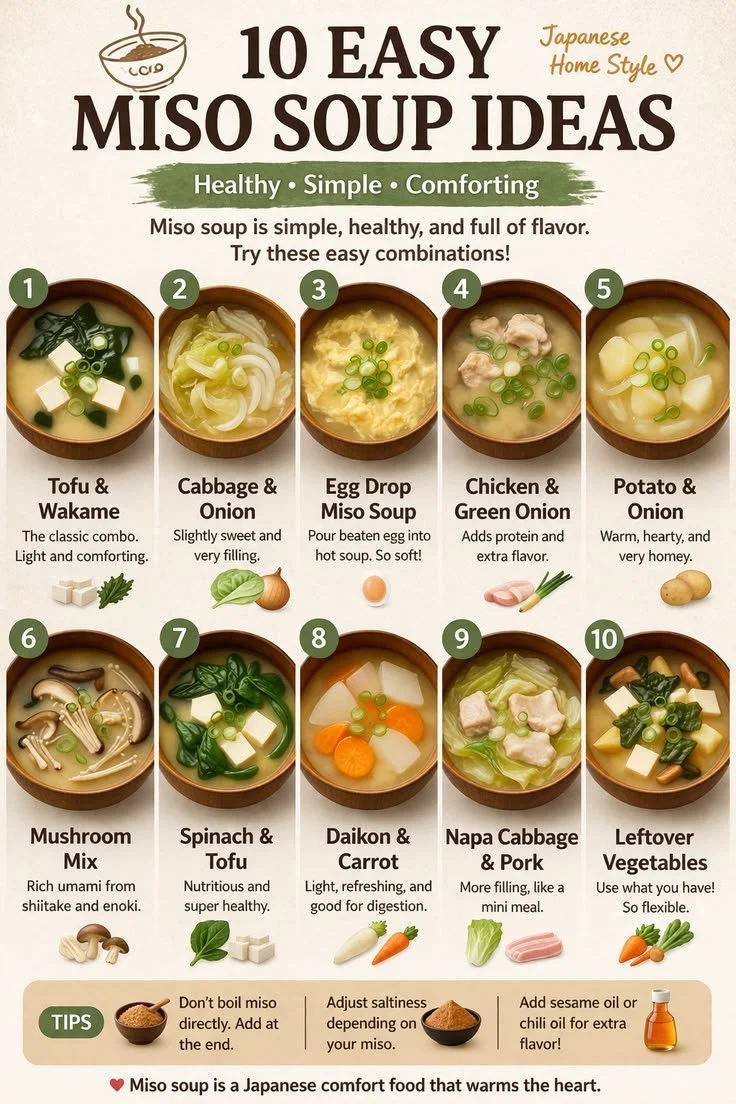
Miso Soup is a comforting and nutritious dish that has become a staple in Japanese cuisine. This simple yet flavorful soup combines the umami depth of miso paste, the creaminess of tofu, and the lightness of seaweed. Learn how to prepare this delightful soup in your own kitchen and experience its soothing qualities, whether as a starter or a quick meal.
Why You’ll Love Miso Soup
- Quick and Easy: Miso soup can be prepared in just 15 minutes, making it a convenient option for busy weeknights or a last-minute meal.
- Customizable: With just a few simple ingredients, you can easily add your favorite vegetables or proteins to cater to your taste.
- Healthy and Nutritious: The soup is packed with protein from tofu and various vitamins from the optional vegetable additions, making it a wholesome choice.
- Comforting and Satisfying: Miso soup offers warmth and nourishment, making it perfect for cold days or when you need a bit of comfort.
- Versatile: Enjoy it as a light starter, a side dish, or even as a meal on its own. It pairs well with a variety of foods.
Recipe Overview
- Prep Time: 5 minutes
- Cook Time: 10 minutes
- Total Time: 15 minutes
- Servings: 4
- Difficulty Level: Easy
Ingredients You’ll Need for Miso Soup
-
Base Ingredients:
- Miso paste (provides rich umami flavor; use white for milder taste or red for stronger flavor)
- Tofu (extra firm is best for texture; silken tofu works if you prefer a softer addition)
- Wakame seaweed (rehydrated in the soup; adds a lovely taste and texture)
-
Other Ingredients:
- Green onions (for garnish and added flavor)
- Water (the base of your soup)
-
Optional Add-Ins:
- Vegetables like mushrooms or carrots (enhance flavor and nutrition)
- You can also add cooked rice or noodles for a heartier version.

How to Make Miso Soup
-
Prepare the Base: In a pot, bring 4 cups of water to a gentle simmer over medium heat.
-
Rehydrate the Wakame: Add ¼ cup of wakame seaweed to the pot. Let it rehydrate for about 5 minutes, stirring occasionally until it expands and becomes tender.
-
Add Miso Paste: Whisk in 3 tablespoons of miso paste until it dissolves completely into the broth. Ensure there are no lumps for a smooth soup.
-
Incorporate Tofu and Vegetables: Gently add 1 cup of cubed tofu and any optional vegetables you desire (like sliced mushrooms or carrots). Cook for an additional 3 to 5 minutes, or until everything is heated through.
-
Garnish and Serve: Turn off the heat and garnish with chopped green onions. Serve hot in bowls and enjoy!
Tips for Success
- Miso Paste: Taste the soup after whisking in the miso. Adjust the amount based on your preferred flavor.
- Avoid Boiling: Never boil the soup after adding miso as this can kill the beneficial probiotics.
- Tofu Handling: If using extra firm tofu, press it for about 10 minutes to remove excess moisture for better texture.
- Add Vegetables Towards the End: If using quick-cooking vegetables, add them in the last few minutes of cooking to keep them vibrant and tender.
Easy Variations
- Protein Swap: Use shrimp or chicken for a different protein option instead of tofu.
- Spice it Up: Add a dash of chili oil or a sprinkle of red pepper flakes for a spicy kick.
- Make it Vegetarian: Opt for vegetable broth instead of water for added flavor depth.
- Add Noodles: Incorporate udon or soba noodles for a more filling meal.
- Herbs and Spices: Experiment with adding ginger or garlic for an aromatic lift.
What to Serve with Miso Soup
- Steamed Rice: A bowl of steamed rice complements miso soup perfectly, creating a traditional Japanese meal.
- Sushi Rolls: Pairing miso soup with sushi makes for a delightful combination.
- Japanese Pickles: Adding tsukemono (Japanese pickles) can provide a nice tangy contrast.
- Tempura: The crispy texture of tempura food enhances the warmth of miso soup.
Storage and Reheating
- Refrigerator Storage: Miso soup can be stored in the fridge for up to 3 days. Keep it in an airtight container.
- Freezer Storage: While freezing is not recommended due to the texture of tofu, you can freeze the broth without tofu for up to 1 month. Add fresh tofu when reheating.
- Reheating Method: Gently reheat on the stovetop over low heat. Avoid boiling to maintain texture and flavor.
- Meal Prep Note: For meal prep, store the miso paste and other ingredients separately, and combine just before heating for optimal freshness.
Common Mistakes to Avoid
- Using Too Much Miso: Adding too much miso can overpower the flavors. Start with less and adjust gradually.
- Skipping the Wakame: Not adding wakame can lead to a less authentic taste; don’t skip this key ingredient.
- Boiling After Miso Addition: As mentioned, boiling can harm the flavor and texture. Keep it at a low simmer after adding miso.
- Overcooking Tofu: Adding tofu too early can lead to it disintegrating; add it closer to the end of cooking.
Miso Soup: Background & Cultural Inspiration
Miso soup is a traditional Japanese dish often served daily in households. It represents simple, wholesome cooking that emphasizes fresh, seasonal ingredients. Miso itself is made from fermented soybeans, embodying the art of fermentation that is prevalent in Japanese cuisine. The addition of seaweed symbolizes the connection to the ocean, showcasing the country’s rich culinary heritage. Each region in Japan may have its unique take on miso soup, reflecting local tastes and traditions.
Frequently Asked Questions
Can I make miso soup ahead of time?
Yes, you can prepare the broth ahead of time. Just add the miso paste and ingredients right before serving for the best flavor and texture.
What is the difference between white and red miso?
White miso tends to have a milder, sweeter taste, while red miso is richer and saltier. Choose according to your flavor preference.
Can I use fresh vegetables?
Yes, fresh vegetables can be used! Just ensure they are cut small enough to cook through quickly.
How do I store leftover miso soup?
Store it in an airtight container in the refrigerator for up to 3 days. Reheat gently before serving.
Is miso soup gluten-free?
Some miso pastes contain barley, which is not gluten-free. Check the label to ensure it meets your dietary needs.
Final Thoughts
Miso soup is not just a simple recipe; it’s a comforting dish that connects you to Japanese culture and tradition. Its ease of preparation and versatility make it a fantastic addition to any meal. Whether enjoyed by itself or alongside other dishes, this miso soup is worth making time and again. Grab your ingredients and experience the warmth and depth of flavor this classic soup has to offer!